Datasheet e-PCM — A4 · 2 pages

Permanent predictive monitoring for AC generators. Same product family as e-MCM and AMT Pro.

Page 1 — Product
ArtesisITALIA
e-PCM System · Permanent Predictive Monitoring for Generators
1 / 2

Your generator knows when it's about to fail.
Learn to listen.

The e-PCM (Predictive Condition Monitor) is the permanent predictive monitoring system for AC generators: diesel, wind, hydroelectric, steam. It connects to the control panel terminals, samples three-phase voltage and current at 10,000 Hz per channel and automatically builds a digital twin of the generator. From that point on, it continuously detects electrical, mechanical and insulation faults — weeks or months before shutdown.

10 kHz
sampling per channel · 6 V+I channels
24/7
continuous online monitoring
3
complementary PSD bands · LF / HR / HF
36%
of electrical faults are stator faults · all detected
How it works — the e-PCM connects to the generator control panel, not to the machine
AC Generator
diesel · wind · hydro · steam
→
Control Panel
standard CTs + VTs · no on-board sensors
→
e-PCM
ESA · 10 kHz · self-learning
→
auto-learning
Digital Twin
adaptive baseline · fault trends
→
Traffic light + SCADA
Early Warning
relay · Modbus · cloud

What it measures

  • Voltages Vr, Vs, Vt and currents Ir, Is, It
  • Voltage and current imbalance
  • Active, reactive and apparent power
  • Power factor and cos φ
  • Voltage and current THD (harmonics)
  • PSD across three complementary bands
  • Supply frequency and actual rotation speed
  • Instantaneous operating efficiency

Electrical faults detected

  • Inter-turn short circuits in stator winding
  • Insulation degradation: thermal, moisture, wear
  • Stator winding looseness
  • Broken rotor bars or end-ring cracks
  • Static and dynamic rotor eccentricity
  • Negative phase sequence
  • Under-excitation and overvoltage
  • VFD interference and supply quality issues

Mechanical faults detected

  • Mechanical imbalance and misalignment
  • Loose or deteriorated foundation
  • Bearings: inner/outer race, rolling element, cage
  • Gear wear and gear mesh
  • Loose belts and drivetrain backlash
  • Rotor physical damage due to corrosion
  • Brush and commutator problems
  • Structural resonance and soft-foot
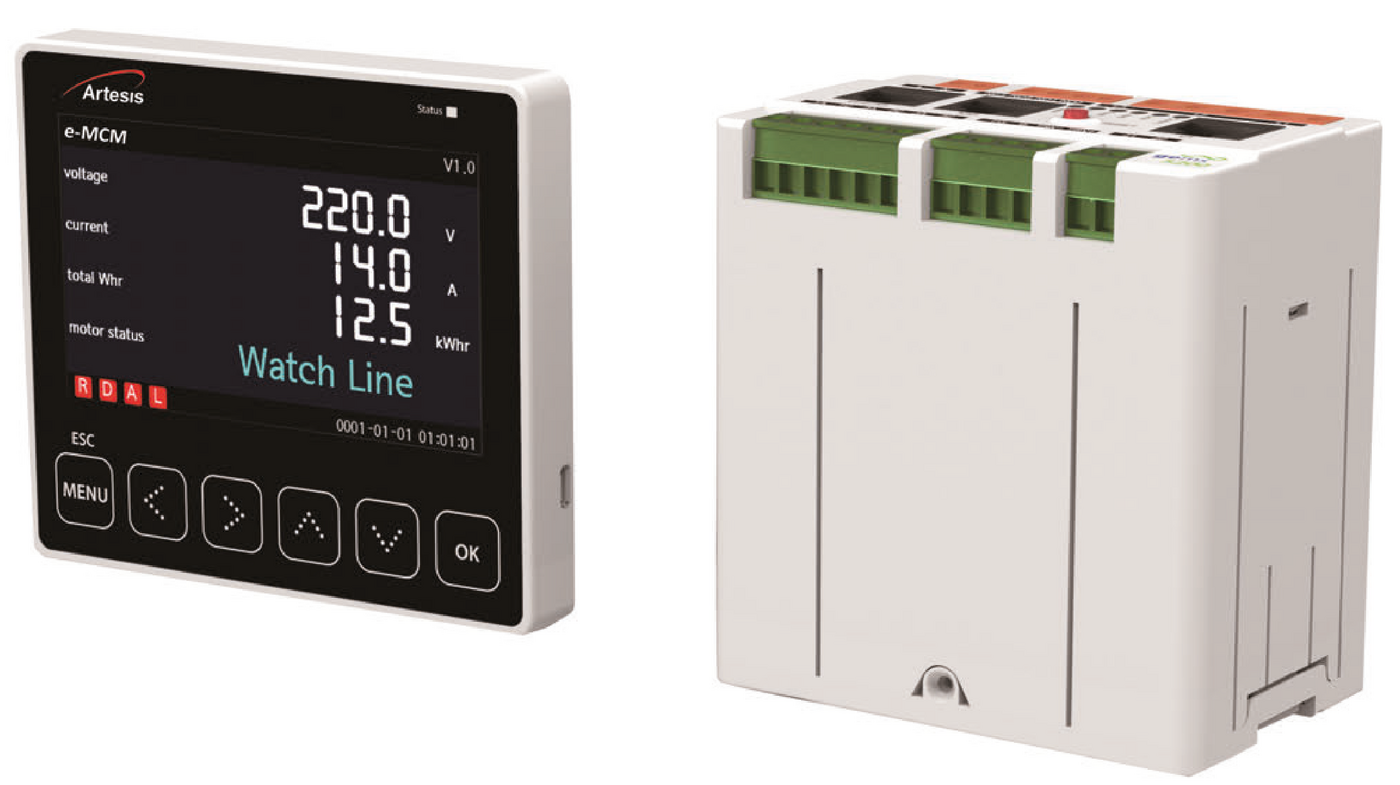
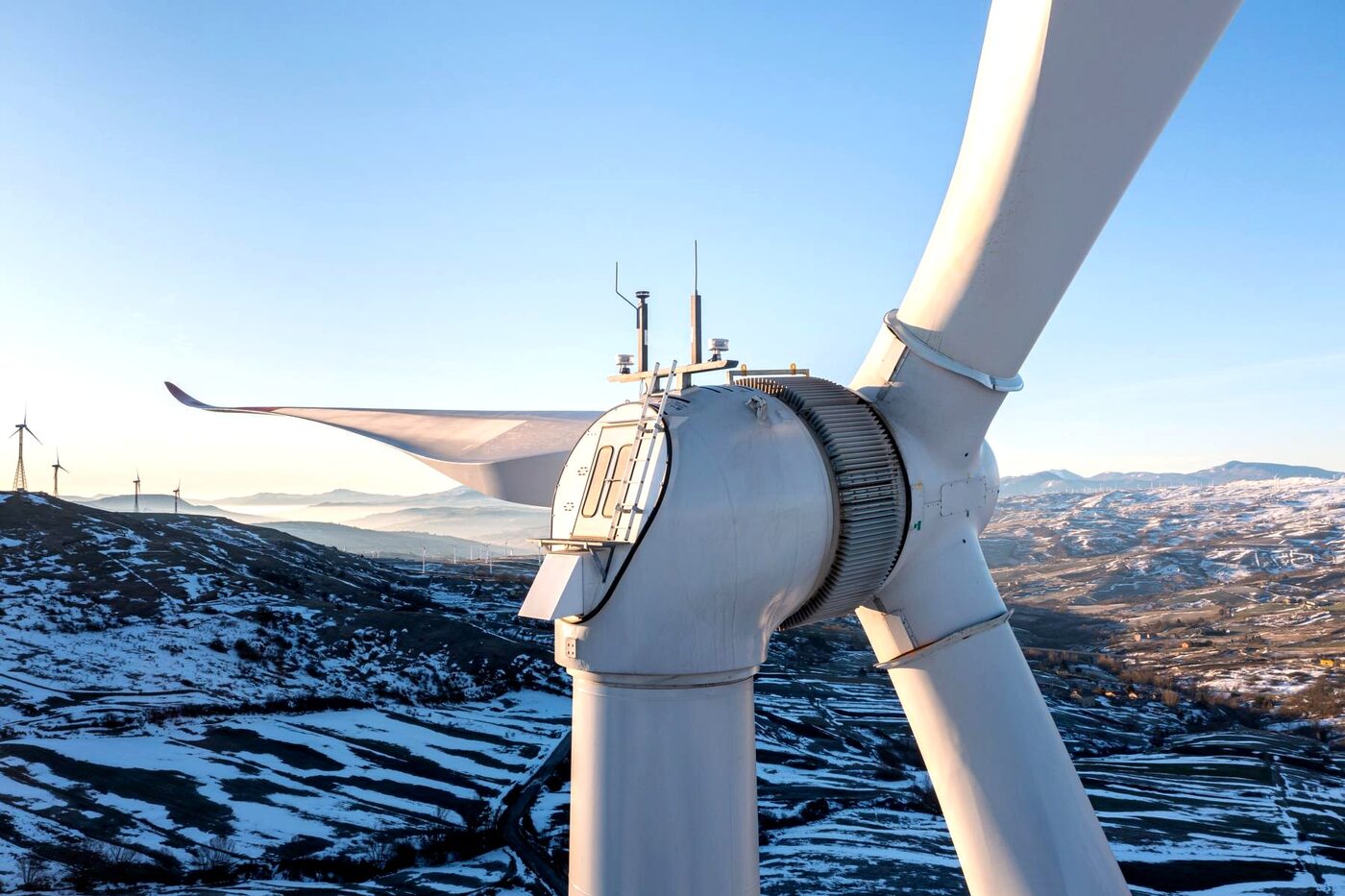
Artesis e-PCM device — DIN-rail module for continuous monitoring of AC generators Wind turbines monitored with Artesis e-PCM system
Monitored generators
Diesel
Wind
Hydroelectric
Steam turbine
Marine
Data centre
UPS / Backup
Offshore
Monitor it. Learn it. Predict it.
Continue →
artesisitalia.it
Page 2 — Technology · Case Study · Contacts
ArtesisITALIA
e-PCM · ESA Technology · Case Study · Contacts
2 / 2
Patented technology · NASA origin · ESA — Electrical Signature Analysis

The generator is its own sensor.

ESA analyses three-phase voltage and current at 10,000 Hz to detect mechanical and electrical faults with no on-board sensors. The model-based approach of the e-PCM separates the contribution of the supply network from the actual fault, eliminating false alarms. The digital twin is built automatically in the first hours of operation and is continuously updated as load and operating conditions change.

3 spectral analysis bands (PSD) — full coverage 0 – 5,000 Hz
LF Band
Low Frequency
0 – 500 Hz
Low-frequency mechanical faults: imbalance, misalignment, loose foundation, structural resonance.
HR Band
High Resolution
0 – 1,250 Hz · 0.3 Hz per bin
High-resolution electrical faults: inter-turn short circuits, eccentricity, broken rotor bars. Slip and supply sidebands.
HF Band
High Frequency
0 – 5,000 Hz
Bearings and gears: BPFO, BPFI, BSF, FTF frequencies modulated on the current signal. Gear mesh and related sidebands.
Stator — electrical faults
Inter-turn short circuits · insulation degradation · phase imbalance · phase-to-phase fault
Mechanical faults
Imbalance · misalignment · loose foundation · soft-foot · resonance
Bearing faults
Inner/outer race (BPFI/BPFO) · rolling element (BSF) · cage (FTF)
Rotor insulation degradation
Broken rotor bars · cracked end ring · shorted windings · brushes
Gears / drivetrain
Tooth wear · cracking · abnormal gear mesh · loose belts
Power quality / operational
THD · supply imbalance · VFD interference · overvoltage · power reversal
Local display
Relay / SCADA
Modbus RTU
Artesis Cloud
Mobile app
Case Study · Hydroelectric Power

Hydroelectric plant · 6 generators

6 hydro generators connected simultaneously · comparative analysis across units · validated also on a 95 MW steam turbogenerator and a 350 kW diesel set.
2 stator faults
developing pre-alarm
+ 1 loose foundation
The challenge — The diagnosis — The result

Six hydraulic generators connected simultaneously. The e-PCM compared the electrical signatures of all units in real time, identifying anomalies that traditional protection systems had not flagged — before they reached the alarm threshold.

Comparative assessment
Five generators in good condition (high power quality, low THD). A sixth unit shows a loose foundation — diagnosed by spectral comparison between generators at the same plant. The operator had no indication from existing systems.
Developing stator faults
Two generators show developing stator faults, still below the alarm threshold. Early detection allows the intervention to be scheduled during the next planned outage, with no production loss.
1

Big Data 10M+

25 years of electrical signatures compared for every diagnosis.

2

Digital Twin

Self-learned generator model. Adaptive baseline.

3

Algorithm + Report

Fault type, severity and estimated time to failure.

Also as a Service

e-PCM rental with technical report included. No upfront investment. Up and running in 1 day.

Chrome → Save as PDF
(enable "Background graphics")